
Danish-Swedish Kayak Expedition North-East Greenland 1989
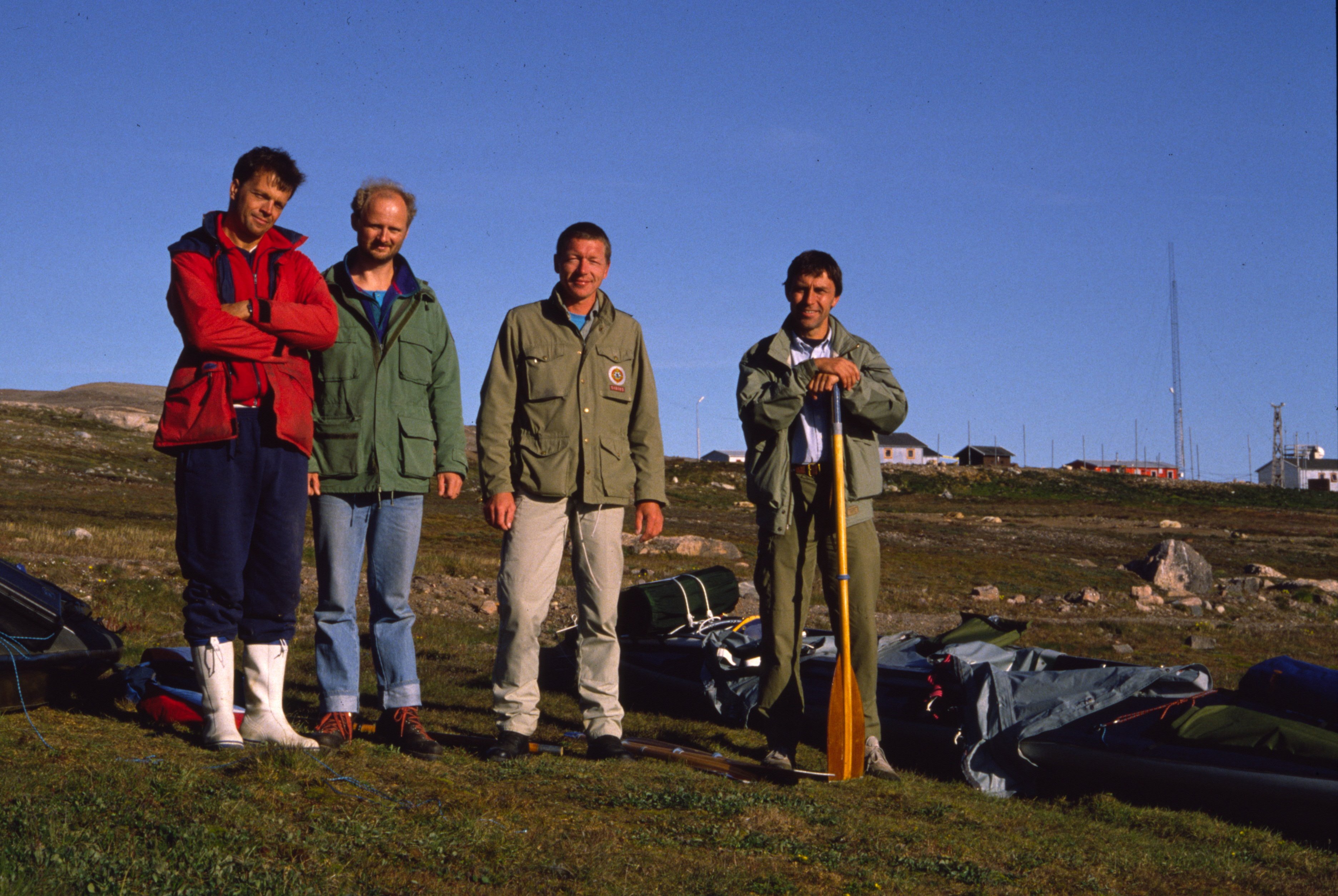
From left: Olaf Malver, Claus Birkbøll, Peter Schmidt Mikkelsen and Magnus Elander.
It all started back in 1987 while planning a trip to Northeast Greenland. The trip was to take place in the summer of 1989, and we were four friends behind the idea - a kayak trip from Daneborg to Mestersvig.
Nature would speak for itself. It had captivated me since I first saw North-East Greenland. Desolate and magnificent, but also unpredictable in terms of weather. The region we were going to visit was already well-known to me from my military service with the Sirius Dog Sledge Patrol from 1977-1979. I looked forward to revisiting the region, and as a holiday in North-East Greenland is no everyday occurrence, I tried my best to prepare for the adventure.
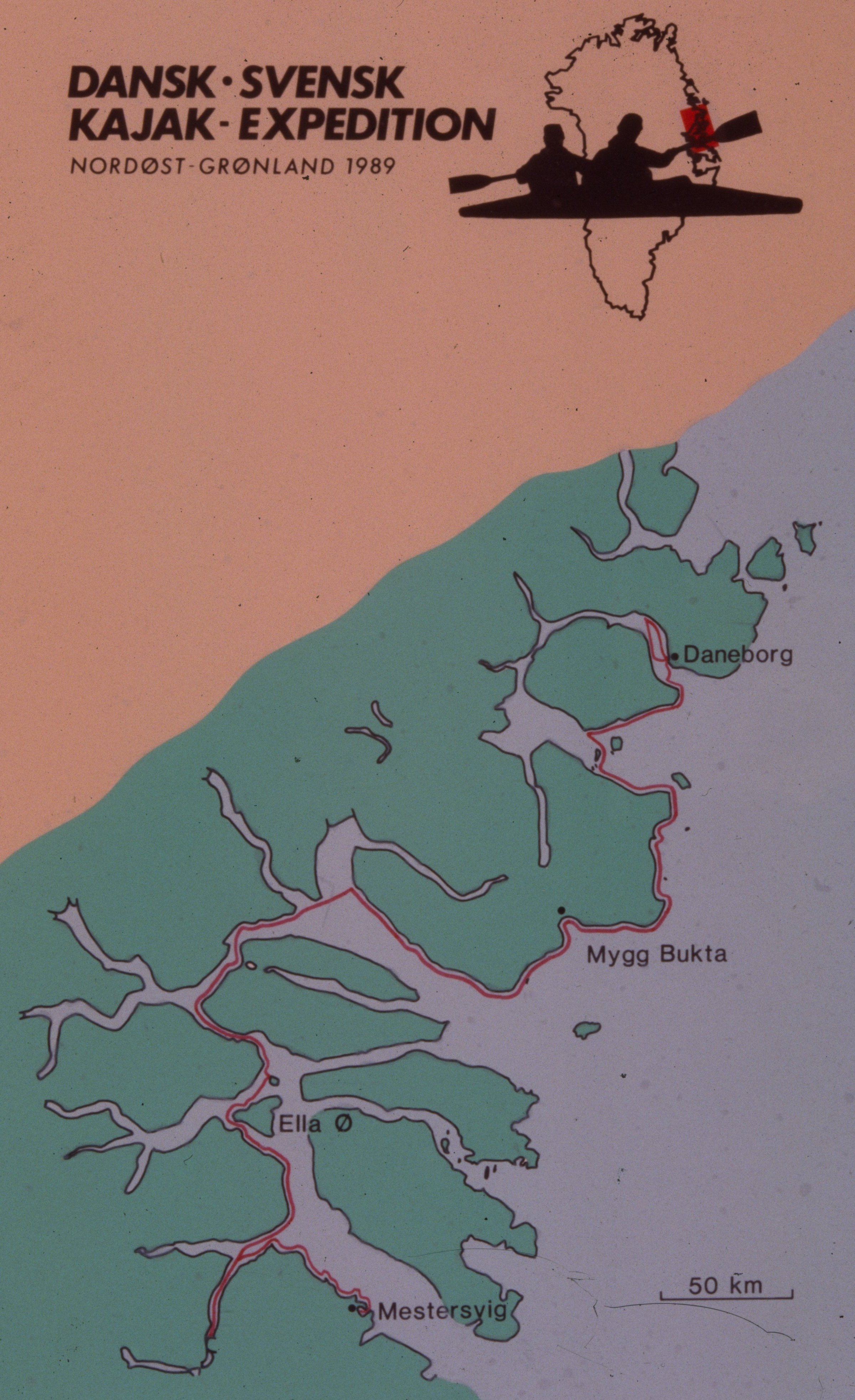
Distance: 713 km in 30 days.
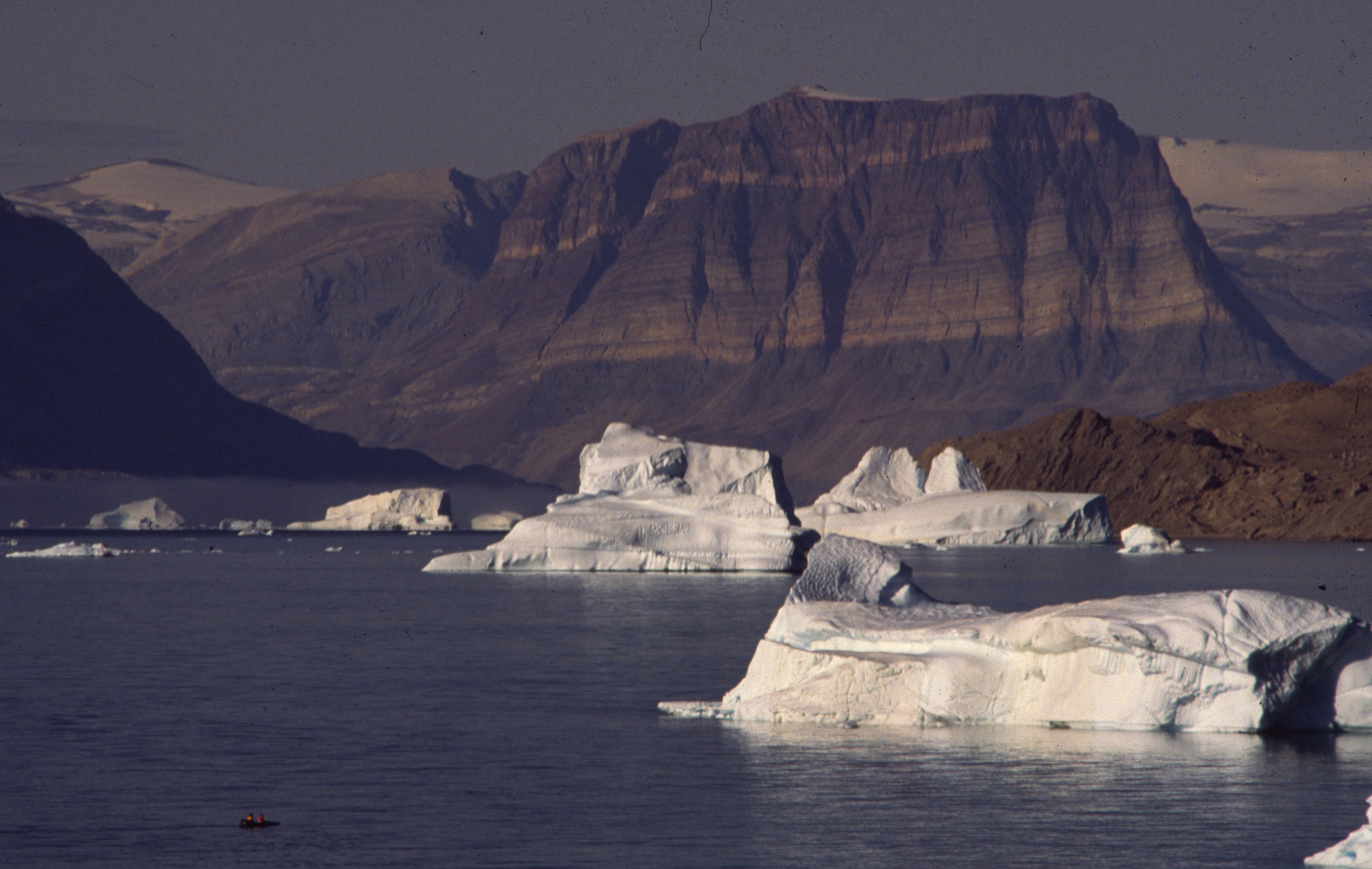
The scenery of North-East Greenland is desolate and magnificent, but somewhat unpredictable with respect to the weather. The Arctic animals, birds and sea life are at home here. North-East Greenland had captivated me since I first set eyes on it while with the Sledge Patrol, where I had learnt to take just one day at a time! What else would we encounter along the way? Nothing, apart from some small huts found at intervals along the coasts of the fjords. The huts were very familiar to me, and had often provided me and my companions with shelter during snow storms or bad weather. Except for groups of stone circles and house ruins built by the Inuit centuries ago, the only evidence of other human activities we would come across were these huts. But who had built them? When and why? I knew a little of their history, but wanted to learn more.
The research started on my own bookshelves, in the miscellaneous collection of books about North-East Greenland I had assembled over the years. Here I found a part of their history. Most of the huts had been built by Norwegian and Danish fox-trappers, a few had been established for scientific purposes, some dated back to the Second World War, and others were shelters built by people working at the weather and military stations on the coast. Almost everyone knew something about the huts. For travellers in the region the huts were often an obvious destination after a good day's journey and a rustic but safe shelter for the night. This preliminary search was compiled into a simple leaflet, which proved very useful on our 1989 kayak journey.The expedition in 1989 inspired me to continue research into the history of the huts and buildings, and the idea of gathering the results into a book also began to evolve. The published sources had only answered some of my questions, and the answers were often vague. The trail now led me to archives in Norway and Denmark. These proved to contain a vast and varied material, including trappers' diaries, travellers' log books, etc. Now the names of some of the people involved began to emerge from their anonymity. The huts, after all, consisted of only rough timbers and roofing felt. It was the people who had built and used them that provided the huts with identity. Where were they now? How many were still alive, and would it be possible to find them?
A couple of names and addresses formed the starting point, and soon - through a letter or a phone call - names became living persons, who could tell me things which the books and the archives could never answer. With every new contact I was met by an overwhelming kindness and willingness to help me in my quest. The network spread like rings in water, new names turned up, sometimes only the name of a city or a county, but a lead nonetheless. That the region ‘up there' is something quite special was confirmed by the almost identical reply: "North-East Greenland? - Yes, that's where I spent the best years of my life…."
Journeys in Norway and Denmark now followed and led to many a friendly talk of days gone by in North-East Greenland. The continued search turned out to be very time-consuming, but at the same time very interesting and satisfying as I made contact with more and more of the former fox-trappers and other Greenland old-timers, and learnt more of their lives and adventures. This volume is the story of these people, and of the huts and houses they built in North-East Greenland!
In 1990 the idea of publishing the material took a definite structure, and in 1992 the work with the manuscript began. The source material continued to grow, and it became evident that measures had to be taken to limit the scope. As the majority of the huts had been built in connection with the Norwegian and Danish trappers, the trapper era became the main theme of the book; but as the trapping was very much connected with exploration, as well as Norwegian and Danish administration and politics, these are mentioned too.
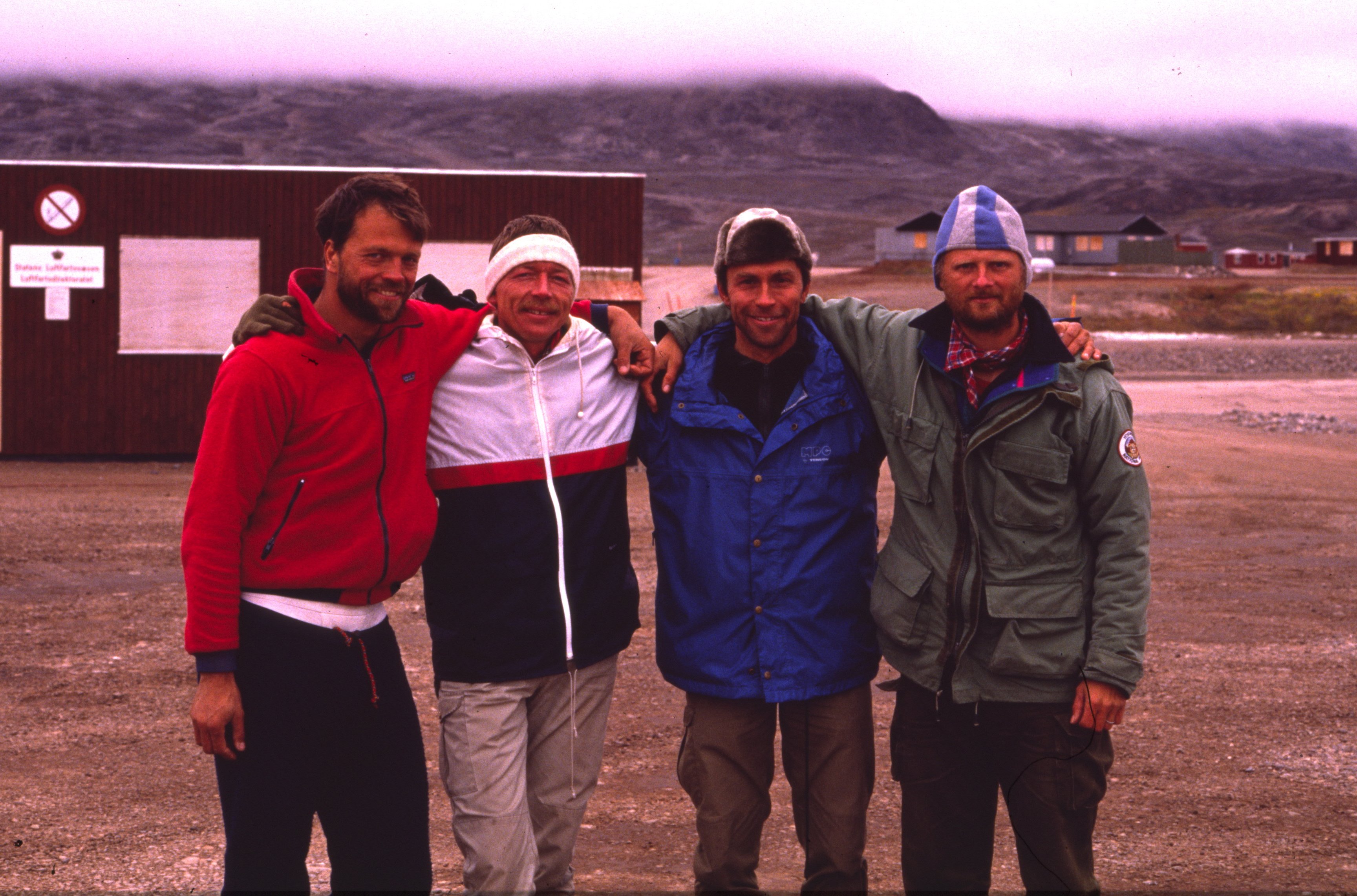
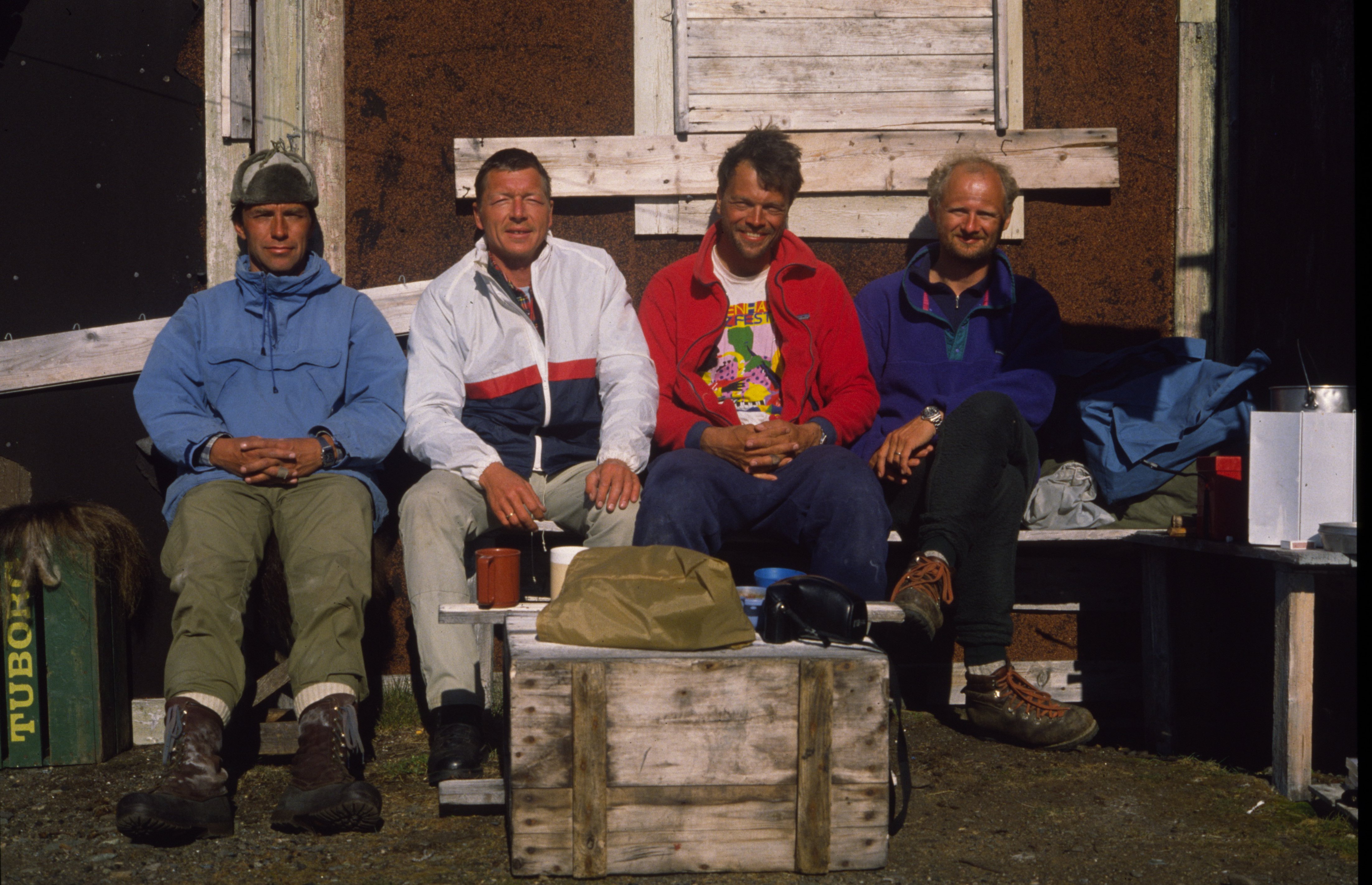
From left: Olaf, Peter, Magnus and Claus.